NetSuite implementation is often framed as a project with a definitive end date: an ERP system that, once deployed, marks the finish line. But success in ERP software implementation is not just about going live; it’s about ensuring long-term operational excellence. The reality is that implementation is an ongoing process, and viewing completion as a single milestone rather than a phased transformation leads to setbacks, inefficiencies, and costly rework.
Many companies rush through the implementation phases, believing that once their system is live, the hard work is done. The truth? A successful ERP setup isn’t about flipping a switch; it’s about ensuring the system is fully aligned with business objectives, users are properly trained, and all workflows are optimized. Organizations that invest in a post-go-live strategy see higher adoption rates, improved efficiency, and greater long-term ROI. Gartner includes, “CFOs should take a business-strategy-first approach in defining the ERP value story.”
Key Takeaways
ERP transformation is not a one-time event: It requires ongoing optimization to ensure long-term success.
The myth of “completion” often leads to failure: ERP systems need continuous refinement, not just a Phase 1 launch.
Operational excellence on Day 1 is possible: But only with proper planning, training, and strategic execution.
ERP migration isn’t just about data: It’s about aligning technology with business processes and goals.
Assessing success post-go-live is critical: Companies that invest in continuous improvements maximize their NetSuite ROI.
The Myth of ERP Implementation Completion
Many organizations approach ERP implementation methodology with a “go-live and done” mentality. This mindset is one of the biggest contributors to post-implementation failures. According to the NetSuite Guide for Leading a Successful ERP Implementation by Alphabold, 50% of ERP implementations outright fail, and 51% of companies experience operational disruption while going live. The 90 Day CFO Playbook by Yellow Bag explains, “Perfectly planned projects get off track. Escalations can happen with the best teams and the best plans.”
Why does this happen? The most common pitfalls include:
Insufficient planning for post-go-live operations: Many companies allocate all resources to going live but fail to budget for ongoing optimization.
Lack of user training and adoption strategies: If employees are not properly trained, they won’t use the system efficiently, leading to workarounds and inefficiencies.
Ignoring the need for continuous refinement: NetSuite is a dynamic system that evolves with business needs. Failing to revisit configurations post-go-live often leads to stagnation.
NetSuite itself acknowledges that “An ERP implementation is more than just a software upgrade. It is a complete transformation of business processes”. Organizations that treat it as an evolving process rather than a one-time deployment are the ones that achieve long-term success.
Phase 1 vs. Phase 2: Where ERP Implementations Go Wrong
A common issue with ERP software implementation is the rushed nature of Phase 1. Many companies aim to launch the system quickly, deferring critical enhancements, integrations, and refinements to a future Phase 2 that often never materializes.
So, what happens when Phase 2 is postponed indefinitely?
Unrealized efficiencies: Without fully optimized processes, employees continue using inefficient workflows, diminishing the ERP’s potential benefits.
Adoption struggles: If training and user onboarding are delayed, resistance grows, leading to lower usage rates and inconsistent data entry.
Higher costs: Every fix, adjustment, or delayed enhancement adds to the total ERP implementation cost, making the system more expensive in the long run.
Successful implementations build a roadmap that ensures Phase 2 enhancements are planned, budgeted, and executed, rather than treated as an afterthought.
How Lack of Knowledge Derails ERP Success
Many ERP failures stem from a fundamental misunderstanding of what ERP transformation requires. Companies that underestimate the complexity of ERP migration and system optimization often struggle with:
Data inconsistencies: Migrating from legacy systems to NetSuite requires meticulous planning. Poor data migration strategies result in reporting errors and financial discrepancies.
Misaligned business processes: NetSuite should be configured around how your business operates, not just default settings. Failing to align workflows leads to inefficiencies.
Unclear ownership: Successful ERP implementation requires cross-departmental collaboration. If finance, operations, and IT aren’t aligned, the system won’t deliver its intended value.
The NetSuite Guide for Leading a Successful ERP Implementation highlights that “most implementations cost three to four times more than the initial budget”. This isn’t due to NetSuite itself; it’s due to poor planning, rushed execution, and failure to account for all business needs from the outset.
Viewing Implementation Success Through a New Lens
A successful NetSuite setup should be measured by more than just going live. The real indicators of success include:
Operational readiness from Day 1: Are employees trained and confident in using the system?
Seamless data integration: Is the ERP providing real-time visibility across all departments?
Process efficiency: Has the system reduced manual work, improved reporting, and streamlined workflows?
Scalability: Is the system configured to support future growth, new integrations, and evolving business needs?
Companies that prioritize these factors from the start achieve ERP software implementation success faster and with fewer setbacks.
Ensuring Operational Excellence from Day 1
Achieving ERP transformation requires strategic planning at every stage. Here’s how to ensure operational excellence from the moment your NetSuite system goes live:
1. Invest in Early User Training
User adoption is one of the most overlooked factors in ERP success. Training shouldn’t start after go-live; it should be integrated throughout the project’s phases.
Provide role-based training tailored to different departments.
Conduct hands-on workshops to ensure employees understand real-world applications.
Offer ongoing support to address post-go-live challenges.
2. Continuously Optimize Workflows
Going live is just the beginning. Businesses should schedule regular system reviews to identify areas for improvement.
Conduct quarterly ERP health checks to refine configurations.
Gather user feedback to pinpoint pain points and inefficiencies.
Optimize reporting dashboards for better data-driven decision-making.
3. Establish a Strong Support System
Many companies assume their implementation methodology ends at deployment. However, ongoing support is crucial for maintaining system efficiency.
Designate internal NetSuite champions to support end-users.
Work with trusted NetSuite consultants for post-go-live enhancements.
Budget for continuous improvements to avoid costly rework later.
Did You Complete Your NetSuite Implementation with Success?
If your organization has recently gone live with NetSuite, ask yourself:
Are all business processes fully optimized, or do gaps remain?
Is your team confident in using the system, or are they struggling?
Have you conducted a post-go-live assessment to identify issues?
Do you have a plan for ongoing NetSuite improvements and enhancements?
If the answer to any of these questions is unclear, your migration/implementation may not be fully complete. Success isn’t about meeting a go-live deadline; it’s about ensuring long-term efficiency, adoption, and business alignment.
Work with Yellow Bag Consulting to Ensure ERP Success
At Yellow Bag Consulting, we specialize in ensuring successful NetSuite implementation beyond just going live. Whether you need post-go-live optimization, training support, or a full ERP audit, our team provides expert guidance to keep your system running at peak efficiency.
Don’t settle for a system that “just works.” Get the most out of your NetSuite investment. Contact Yellow Bag Consulting today.
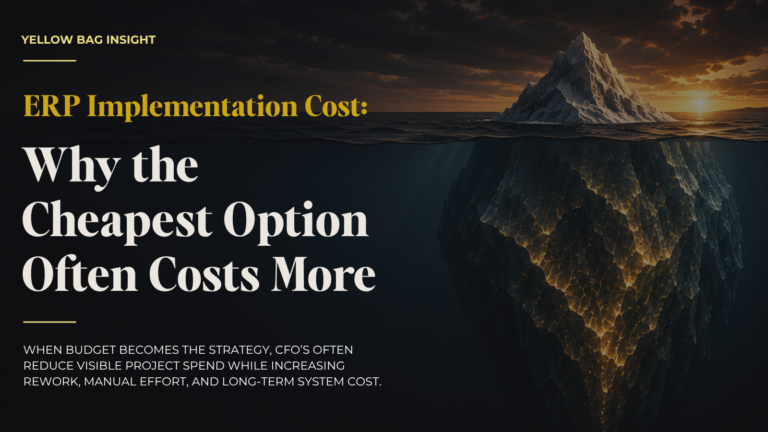
When budget becomes the strategy, CFOs often reduce visible project spend while increasing rework, manual effort, and long-term system cost. Introduction ERP implementations fail budgets. They also fail businesses, and the two are not the same problem. The decisions that drive up total cost rarely show up on an invoice. They show up eighteen months […]